
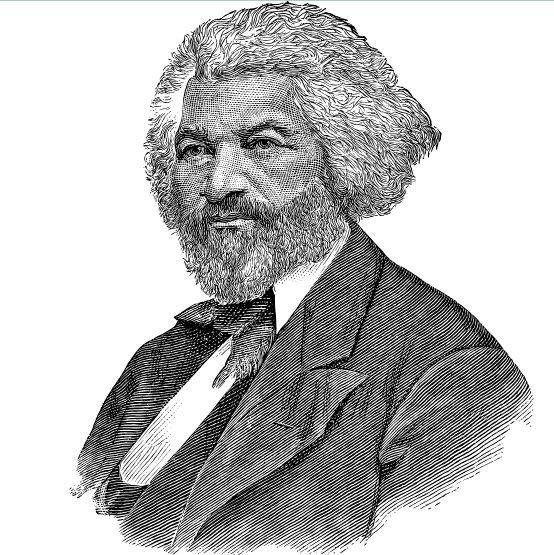

Frederick Douglass's 4th of July speech is the most important thing America never taught you.
Your school didn't teach it to you. That was not an accident.
Every July 4th, America puts on its bogus costume.
Fireworks. Flags. Cookouts. Speeches about freedom, liberty, and the greatest nation on earth.
And every July 4th, Black America is supposed to stand up and celebrate — right alongside the people whose
ancestors enslaved ours, Jim Crowed us, redlined us, lynched us, while right now, in 2026, their descendants are
actively working to strip away the constitutional amendments written specifically to protect us.
Frederick Douglass 4th of July speech in 1852 said it plainly. And the reason they didn't put it in your curriculum is because
it is just as true today as it was then.
Frederick Douglass's 4th of July Speech: What He Actually Said
On July 5, 1852 — one day after Independence Day — Frederick Douglass stood before a crowd of approximately 600 people at Corinthian Hall in Rochester, New York. He had been invited by the Rochester Ladies' Anti-Slavery Society to deliver a Fourth of July address.
What he delivered instead was one of the most devastating indictments of American hypocrisy ever put into words.
Frederick Douglass's 4th of July speech opened with praise — honoring the Founding Fathers,
acknowledging their courage, affirming the ideals of the Declaration of Independence. He gave them that.
And then he pivoted.
He told the audience, directly and without apology, that the Fourth of July was their holiday. Not his. Not the holiday of the four million enslaved Black people still in chains across the American South at the time.
He rightly called the celebration — in the presence of slavery — a sham, a thin veil over a festering wound.
He said that the great principles of political freedom and natural justice,
proclaimed in the Declaration of Independence, were being
extended to some men and deliberately withheld from
others solely because of the color of their skin.
He was not speaking theoretically.
He was speaking about people — human beings — being bought and sold,
beaten and bred, worked to death and legally denied every right that the
Constitution claimed to guarantee.
His conclusion was not gentle:
The Fourth of July, he said, revealed the gross injustice and cruelty to which
Black people were constant victims more than any other day of the year.
That was 1852, and it's still a sham.
They Called It Ancient History. It Wasn't.
Here is what happened after Frederick Douglass's 4th of July speech:
The Emancipation Proclamation came in 1863.
The Civil War ended in 1865.
And within months, the South began
rebuilding the system of Black subjugation under a new name.
For one hundred years — one hundred years — Black Americans lived under Jim Crow.
Separate schools,
separate water fountains,
separate everything — and all of it deliberately inferior.
Lynchings were public events.
Voting was a death sentence in many counties.
Economic mobility was blocked at every turn through
convict leasing, sharecropping, and the deliberate destruction of
Black wealth whenever it appeared — most infamously in Tulsa, Oklahoma, in 1921,
when a thriving Black community known as Black Wall Street was burned to the ground
by a white, envious mob while supportive law enforcement watched and, in some cases, participated.
The Fourth of July rang out every single one of those years.
Frederick Douglass's 4th of July speech had named this reality a
century before the Civil Rights Movement gave it a political vocabulary.
Douglass's question — what to the slave is the Fourth of July? — did not expire at emancipation.
It simply changed form.
What to the sharecropper was the Fourth of July?
What to the man who couldn't vote,
couldn't send his children to a decent school,
couldn't buy a house in certain neighborhoods,
couldn't get a bank loan, and could be murdered by
a white man who would never see the inside of a courtroom — what was the Fourth of July to him?
1965: A Foothold, Not a Finish Line
Frederick Douglass's 4th of July speech draws a straight line to history right up to today.
The Voting Rights Act of 1965 was not a gift. It was won through blood.
The children beaten on the Edmund Pettus Bridge in Selma, Alabama, on Bloody Sunday in March of that year —
that footage, broadcast on national television — is what finally forced Congress to act.
The work of Fannie Lou Hamer. John Lewis and the slain bodies of Jimmie Lee Jackson,
James Reeb and Viola Liuzzo were both part of the resistance.
The Voting Rights Act was the most significant piece of civil rights legislation in American history.
It prohibited discriminatory voting practices.
It gave the federal government the power to oversee elections
in states with a history of suppression.
For the first time since Reconstruction, Black Americans in the Deep South
could vote without being beaten, taxed, tested, or terrorized out of it.
That was 1965. Not ancient history. Your parents and grandparents were alive, and so was I.
The Frederick Douglass's 4th of July Speech Speaks to 2026
Here is what is happening right now, in the summer of 2026, while America is planning its fireworks displays.
The Supreme Court has effectively gutted the enforcement power of the Voting Rights Act.
In a ruling many legal scholars describe as a seismic shift in civil rights law,
the Court's decision in Louisiana v. Callais opened the door for Republican-led
states to challenge court-ordered congressional districts that were drawn to give Black
voters a meaningful voice in their own representation.
Alabama moved immediately.
The state legislature, operating under a Republican supermajority, rushed through Senate Bill 1
— redistricting maps that critics and federal courts have previously identified as racially
discriminatory — designed to dilute Black voting power in a state where Black
residents make up over a quarter of the population.
And at the press conference following that bill's passage,
Alabama House Speaker Nathaniel Ledbetter stood before reporters
and said this about the 14th Amendment to the United States Constitution:
"Certainly hope that the Supreme Court will overturn Amendment 14. Gives us a shot to revisit those."
That was like the first strike in a war that should not be taken lightly.
The 14th Amendment is not a technicality.
It is the constitutional guarantee of equal protection under the law.
It is citizenship for Black Americans. It is due process. It was ratified in
1868 — three years after the Civil War — specifically because this country needed
to be forced, at the constitutional level, to recognize Black people as human beings with rights.
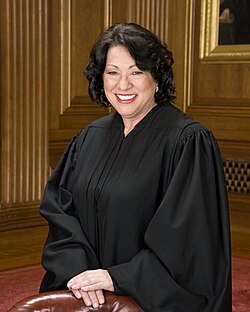
Justice Sonia Sotomayor, dissenting from the Supreme Court's ruling, called what is happening in Alabama what it is: a return to Jim Crow. And it is the type of hypocrisy that Frederick Douglass's 4th of July speech was calling out.
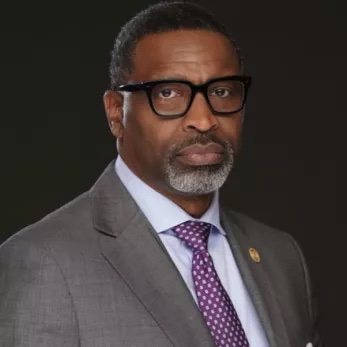
The NAACP's Derrick Johnson said anyone alarmed by these developments — and everyone should be — better be making a plan to act.
Frederick Douglass is not a relic. He has proven to be prophetic.
What the 14th Amendment Actually Protects — And Why They Want It Gone
We all must understand what is at stake here, because this is not abstract constitutional law. This is your life.
The 14th Amendment, ratified in 1868, does the following:
Section 1
guarantees that any person born or naturalized in the United States is a citizen, and that no state can deny any person equal protection under the law or due process. This is the foundation of virtually every civil rights law ever passed in this country.
Section 2
was designed to address Black voting rights specifically — though its enforcement has been inconsistent at best.
When Alabama's Speaker of the House says he hopes the Supreme Court overturns this amendment
— even if he later claims he was talking about court-ordered maps rather than the amendment itself —
the direction he and his ilk want to travel is unmistakable.
These are not isolated incidents. These are coordinated attacks on the legal infrastructure that protects Black Americans.
Frederick Douglass's 4th of July speech was warning against this type of behaviour.
Remove the 14th Amendment's equal protection clause, and you remove the constitutional basis
for school desegregation,
for workplace discrimination protections,
for fair housing law, for voting rights enforcement.
You remove the legal foundation that makes Black citizenship
real rather than theoretical.
This is what Frederick Douglass's 4th of July speech was talking about in 1852. Not just the brutality of slavery. The structure — the system designed to keep Black people outside the circle of American freedom regardless of what the law said on paper.
That structure did not die. It evolved.
The Unbroken Line
Frederick Douglass's 4th of July speech was not a moment in history.
It was a diagnosis of a system — and that system is still running.
There is an unbroken line from 1852 to 2026.
1852: Douglass declares that the Fourth of July is a celebration of freedom that Black Americans are systematically excluded from.
1865–1965: One hundred years of Jim Crow law, legal terror, and economic exploitation confirm everything Douglass said. Emancipation on paper; servitude in practice.
1965: The Voting Rights Act passes — not because America had a change of heart, but because the movement forced it.
2013: The Supreme Court's Shelby County v. Holder decision guts the VRA's preclearance requirement, removing federal oversight of states with documented histories of voter suppression. Within hours of that ruling, Texas announces new voter ID laws. Alabama closes DMV offices in majority-Black counties.
2026: The Court's ruling in Louisiana v. Callais accelerates the dismantling of VRA protections. Alabama rushes through discriminatory maps. The state's House Speaker publicly expresses hope that the 14th Amendment will be overturned.
Every step on this line connects. None of it is accidental.
What You Should Do On July 4th?
You are not obligated to celebrate a freedom that has never fully belonged to you.
You are obligated, however, to understand what is being taken from you right now, in real time, while the fireworks go off.
Read Frederick Douglass's 4th of July speech in full. It is publicly available.
It is one of the most powerful documents in American history,
and it was deliberately kept out of your education because the people
who designed your curriculum understood exactly what would happen if Black people read it and believed it.
Know what the 14th Amendment says and why it matters.
Know what the Voting Rights Act was and what its erosion means.
Know the names: Shelby County. Louisiana v. Callais. Nathaniel Ledbetter.
Know the pattern.
And then act like someone who knows.
The knowledge you were owed — the real history of this country — is not depressing.
It is clarifying. It tells you exactly who you are dealing with, exactly what the stakes
are, and exactly why the work of resistance, education, and collective action is not optional.
Frederick Douglass didn't give that speech to make people feel hopeless.
He gave it to make people feel and know the truth.
The uncomfortable truth is: the system was never designed to include you and me.
The truth is this, too: Systems built by people can be dismantled by people.
That work does not happen in ignorance. It happens when you know.
Start Here
If this post opened something in you — if you're ready to go deeper than what your school,
your news feed, or your history books gave you — that's exactly what Black History Unfiltered was built for.
This is not a summary course. This is a full unlearning.
The scholars they suppressed.
The systems they built to keep you out.
The history they buried because they knew what would happen when you found it.
Enroll in Black History Unfiltered
You were owed this knowledge a long time ago. It's here now.
Sources
- Frederick Douglass, "What to the Slave Is the Fourth of July?" (July 5, 1852) — Rochester, New York
- Alabama Senate Bill 1 (2026) — Alabama State Legislature
- Louisiana v. Callais, U.S. Supreme Court (2026)
- Alabama Political Reporter — Coverage of Ledbetter press conference, May 2026
- NAACP Statement, Derrick Johnson — May 2026
- Justice Sonia Sotomayor dissent — Louisiana v. Callais
0 Comments