


They Didn’t Forget to Teach Us the Truth. They Chose Not To.
Racism in American education history did not happen by accident.
The American education system did not simply tolerate racism.
It was built into it — by design, from the beginning.
And we have been paying the price ever since.
The roots of racism in American education history
run deeper than most people are willing to admit.
And most of us were never supposed to know it.
Let’s be honest about something most people are afraid to say out loud.
It was not a coincidence that we graduated high school — maybe even college —
knowing more about Christopher Columbus than about Mansa Musa,
one of the wealthiest human beings who ever lived.
This was intentional.
They Made Learning a Crime:
The Origins of Racism in American Education History
Understanding racism in American education means going back to the very founding of this nation.
From the very beginning of this nation, education was used as a weapon
— not to liberate our people, but to control us.
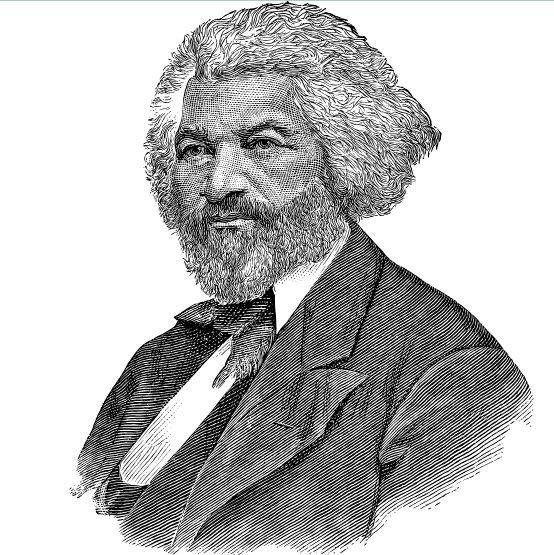
During slavery, it was illegal in most Southern states to teach our ancestors to read or write.
This was calculated. An educated enslaved person was a dangerous one.
Frederick Douglass understood this — when his enslaver discovered he was learning to read,
he warned it would make him “unfit to be a slave.” Douglass later wrote that this was the
moment he understood the direct connection between knowledge and freedom.
The architects of American slavery knew that education was power.
So they made sure our ancestors were denied it.
That denial did not end with emancipation. It simply changed form.
They Burned Our Schools and Called It Progress
After the Civil War, our freed ancestors — hungry for the knowledge that
had been violently withheld from them — built over 4,000 schools across
the South.
HBCUs were founded.
Black newspapers circulated.
Literacy rates among our people
climbed at a pace that stunned the nation.
For a brief, shining moment, it looked like our people might claim our rightful place in education.
However, the backlash was immediate and brutal.
White supremacists burned our schools to the ground.
Our teachers were threatened, beaten, and some were killed.
Entire communities that dared to invest in Black
education were met with organized terror.
This was not random violence — it was a coordinated campaign
to ensure that our people remained uneducated, dependent, and controllable.
As documented by the Equal Justice Initiative, the suppression of Black education
was systematic and deliberate across the entire American South.
And by the time Jim Crow was fully entrenched,
the segregation of our children was not just legal — it was celebrated.
Racism in American education did not begin in a classroom — it began in a courtroom.
The 1896 Supreme Court ruling in Plessy v. Ferguson declared
that facilities could be “separate but equal.”
They were never equal.
Our schools received a fraction of the funding.
Our children used damaged, discarded textbooks
handed down from white schools, and our buildings
were dilapidated.
Lastly, our teachers were paid less for doing the same work.
But what is rarely discussed is that the curriculum itself was also a weapon.
Our children were being taught a version of history that erased our contributions and
positioned white European civilization as the pinnacle of human achievement.
Our history was not absent from American education because we didn't have one
nor was it by accident. It was deliberately removed.
The miseducation didn't stop when the laws changed.
It is still happening — right now, in classrooms across this country.
This is Part 1 of a two-part series.
In Part 2, we break down how this legacy
continues in classrooms today — and what
real education for our people actually looks like.
0 Comments