
Every Lesson They Taught Us Was a Choice — and So Was Every Lesson They Didn’t
We cannot address systemic racism in education without first naming it for what it is.
Systemic racism in education is not a relic of the past —
it is the water our children are still swimming in.
Every choice about what to teach — and what not to teach — is a political decision. When schools spend weeks on Greek and Roman civilization but never mention the Egyptian civilization that our ancestors built, that is a choice. When our children learn about the Founding Fathers of the USA, but nothing about our kingdoms of Mali, Songhai, or Kush, that is a choice.
When the transatlantic slave trade is reduced to a paragraph,
but the American Revolution gets an entire chapter, is a choic, too.
These choices are not random.
They are not oversights.
They reflect a deliberate effort to maintain
a racial hierarchy — one that positions
white history as universal history
and our history as an afterthought
or footnote.
And they have consequences.
Children who never see themselves in the curriculum are being taught,
without a single word being spoken,
that they do not matter.
That is systemic racism in education operating exactly as intended.
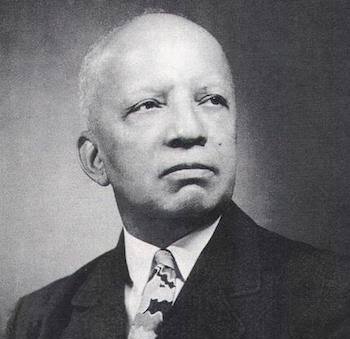
Carter G. Woodson first exposed this truth in The Mis-Education of the Negro, written in 1933, which remains essential reading for our people today. He argued that American education was designed to produce Black people who were psychologically dependent on whiteness — people who had been taught to see themselves through the eyes of their oppressors. It was not a lack of education. It is the type of education weaponized against our minds.
They Integrated the Buildings, Left Our Story Out:
Systemic Racism in Education Evolved
When Brown v. Board of Education was decided in 1954, many of us believed it was the beginning of true educational equality. What actually happened in our communities told a more complicated story.
Our schools were closed. Our principals and teachers — many of them deeply committed educators who had spent their careers serving our children — were demoted or dismissed. Our children were bused into white schools where they were often unwelcome, where the curriculum still did not reflect our history, and where the expectations placed on them were frequently lower.
I attended an all-black elementary and high school until the tenth grade. I had all black teachers, men and women; all black principals and administrators. After so-called integration, the school system went from one hundred percent black to three percent. The logic behind the change? After decades of an all-black system, suddenly, there were not enough “qualified” black educators. That is the part of the result of “school racial integration— and we don't talk about it enough.
What we lost in that moment was not just buildings.
We lost mentors who looked like us.
We lost educators who understood our culture,
our history, and our potential.
We lost an environment where our children were
seen as capable, brilliant, and destined for greatness.
Integration gave our children a seat at the table —
but it was someone else's table, telling someone else's story.
So the buildings changed, but the lies didn't.
Systemic racism in education did not disappear when the law changed either — it evolved.”
To this day, most of our children graduate without ever learning that Africa was the birthplace of human civilization, that our scholars in Timbuktu were preserving and producing knowledge while Europe was in the Dark Ages, or that our enslaved ancestors brought sophisticated knowledge in agriculture and engineering that directly built the wealth of this nation.
Our People Are Descendants of Greatness
Real education about us does not begin with enslavement. It begins in Africa — the continent where all of humanity began.
Real education teaches that the ancient Egyptians, who gave the world mathematics, medicine, architecture, and philosophy, were our ancestors. It teaches that Cheikh Anta Diop spent his life proving, with scientific rigor, that our civilizations were the foundation of world civilization. It teaches that our people were not waiting to be discovered — we were already building, already thinking, already leading.
Real education teaches that the university at Timbuktu was preserving and producing knowledge while Europe was stumbling through the Dark Ages. That our enslaved ancestors did not arrive empty-handed — they brought sophisticated knowledge in agriculture, engineering, and medicine that directly built the wealth of this nation. That our contributions were not incidental to history. They were central to it. This is what systemic racism in education erased — and what we are committed to restoring.
Real education does not make our children feel like victims. It makes them feel like the descendants of greatness — because that is exactly what we are.
We were not given the full story. But it is never too late to reclaim it.
They integrated the buildings and called it equality.
They left our story outside and called it progress.
We are done accepting either lie.
The classroom was never neutral.
Every day our children sit in one without knowing their true history
is another day the system is working exactly as designed.
You are not behind.
You were never behind.
You were deliberately kept
from what was always yours.
Now it is time to take it back.
Read Part 1 to understand how this system was originally built against us.
Then join us in Black History Unfiltered — and start learning what they never wanted us to know.
0 Comments