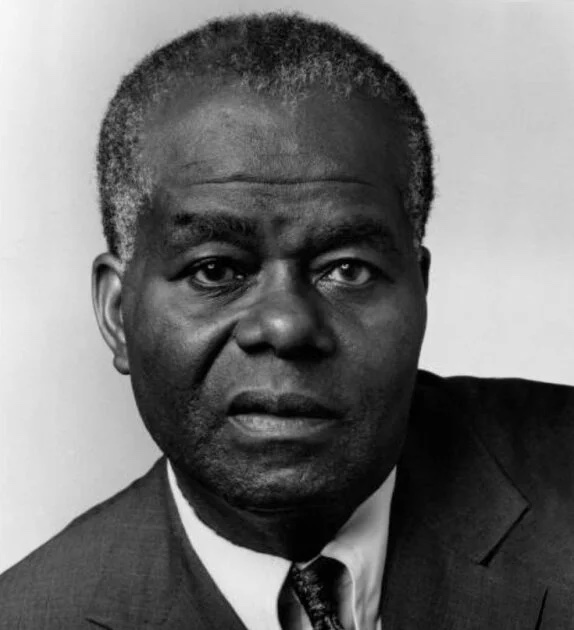

I once drove Dr. John Henrik Clarke home.
It was about an hour's drive to Harlem, and we talked the whole way.
He was already elderly by then, his eyesight failing, but his mind was as sharp as a blade.
There was nothing frail about the way he thought or the way he spoke. His words landed
with the weight of someone who had spent decades studying, thinking, and living life as
a Black man in America.
He invited me in when we arrived at his home, and that's when I saw it.
The library.
The words to fully describe what I felt are inadequate.
Perhaps, Awe-inspiring comes closest, but it doesn't quite
capture the simultaneous feeling of inspiration and smallness —
the sudden awareness of how few books I had collected in my library compared to what he had amassed.
There were nearly 40,000 volumes. They were everywhere — well organized,
shelved with obvious care and intention, but with some books scattered
about in the way that tells you a mind is actively at work.
These weren't display books.
These were tools.
He was using them.
He revealed to me that out of those 40,000 volumes, he intended to donate 10,000 of them to Clark Atlanta University in Atlanta, Georgia.
I stood there and thought: this is what a life devoted to studying the truth about our people actually looks like.
As we continued our conversation, I had the chance to ask him about religion,
which he often brought up in his lectures. His answer was unwavering, fierce, and plain.
He informed me that his research has shown that Christianity and Islam were destroying
Black people, more than anything else. His exact words have stayed with me ever since:
“They are destroying us and have made us blind to the power we have.”
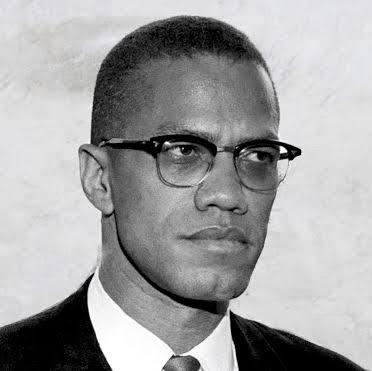
I also asked him what it was like to encounter Malcolm X. He didn't hesitate:
“He was one of the smartest students I ever had, with the ability to absorb large amounts of information and remember it."
John Henrik Clarke — the man the academic establishment spent decades trying to dismiss as unqualified — called Malcolm X his student.
Think about what that lineage means. Think about what was flowing through that room.
I left his home a different person than when I entered it.
And he and his work have inspired me to do the work I've been
doing ever since.
Who Was John Henrik Clarke?
To better understand this man, you need to know his background.
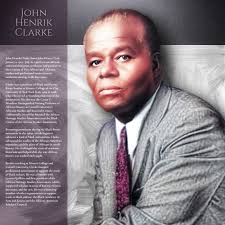
John Henrik Clarke was born on New Year's Day, 1915, in Union Springs, Alabama —
the son of a sharecropper father and a washerwoman mother who died when he was just seven years old.
He left Georgia in 1933 by freight train, arriving in Harlem at eighteen as part of the Great Migration,
with no diploma, no connections, and one consuming question: why had Black people been told they
had no history worth knowing?
That question would drive the next 65 years of his life.
In Harlem, Clarke joined study circles — the Harlem History Club, the Harlem Writers' Workshop —
and studied intermittently at New York University, Columbia University, and the New School for Social Research,
taking what he needed and building the rest himself.
He later renamed himself John *Henrik* after Norwegian rebel playwright Henrik Ibsen,
whose "spunk" and radicalism he openly admired. That choice tells you everything
about who this man was from the beginning.
He was not on the margins of Black intellectual life. He was at the center of it.
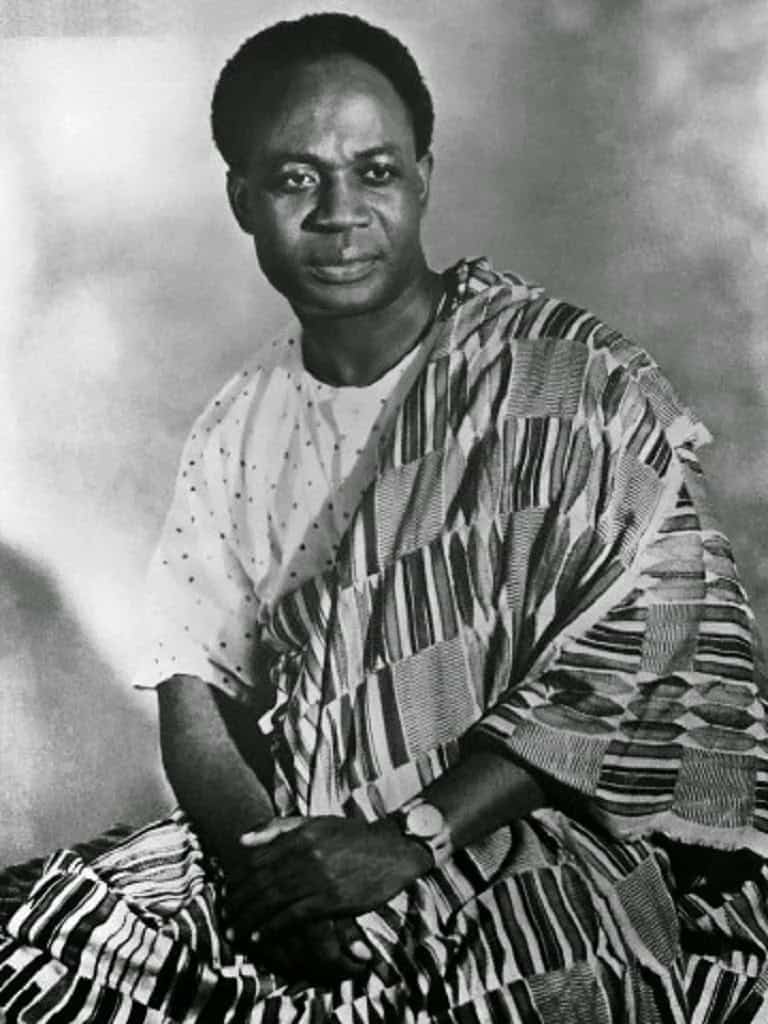
- He mentored Kwame Nkrumah, the first president of Ghana, while Nkrumah was a student in the United States.
- When Ghana became the first Sub-Saharan nation in modern times to gain independence in 1957, Clarke served as a
- journalist for the Ghana Evening News.
- He was enstooled as a chief among the Ga people of Ghana.
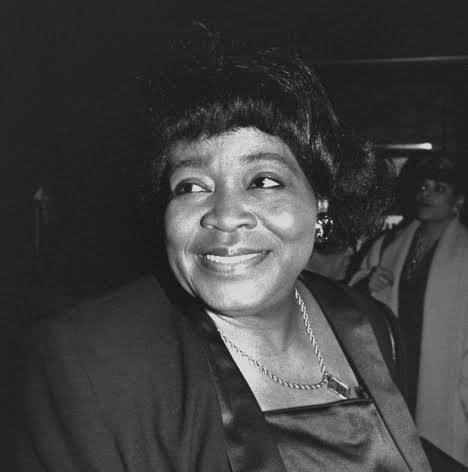
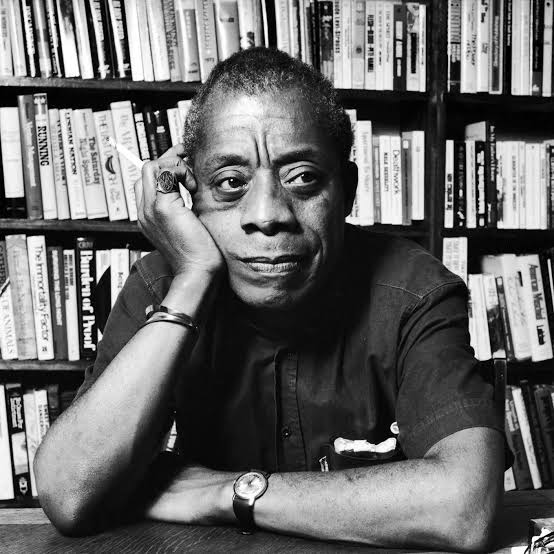
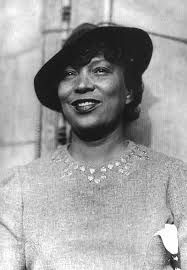
- John Henrik Clarke’s inner circle included Malcolm X, Betty Shabazz, James Baldwin, Zora Neale Hurston, and Yosef ben-Jochannan.
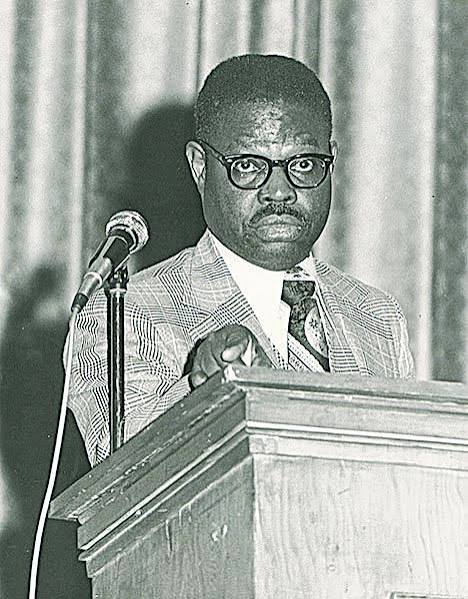
Additionally
- From 1969 to 1986, John Henrik Clarke served as founding chairman of the Department of Black and Puerto Rican Studies at Hunter College.
- He was also the Carter G. Woodson Distinguished Visiting Professor of African History at Cornell University's Africana Studies and Research Center.
- His lesson plans were so detailed, so packed with references, that the Schomburg Library in Harlem asked for copies.
- He introduced the English-speaking world to the work of Cheikh Anta Diop — bringing the father of African-centered history to readers who would never have found him otherwise.
- In 1985, Cornell University named a 60-seat, 9,000-volume library in his honor.
- You can explore more about his life and legacy at BlackPast.org.
A library named after him at Cornell University.
Without a high school diploma.
Let that land.
What Did He Prove?
John Henrik Clarke's contribution was broader and more dangerous than a single discovery.
Cheikh Anta Diop proved the African origins of civilization. Ivan Van Sertima proved the African presence in the Americas before Columbus. Clarke's threat was different — and in some ways larger than both.
John Henrik Clarke proved that Black people could educate
Kamau Kenyatta
themselves into mastery — and then use that mastery to
build institutions that taught other Black people the truth.
That is not a discovery. That is a living demonstration. And a living demonstration cannot be buried the way a book can.
His core intellectual argument was this: African history did not begin with slavery and did not end with emancipation. Africa was the origin point of human civilization — of philosophy, mathematics, medicine, architecture, religion, and governance — and every attempt to erase that fact was a deliberate political act, not an honest scholarly conclusion.
Clarke documented this across 24 authored, co-authored, or edited books, including A New Approach to African History (1967), African People in World History (1993), Christopher Columbus and the Afrikan Holocaust, and the landmark anthology William Styron's Nat Turner: Ten Black Writers Respond — in which Clarke and nine other Black scholars dismantled a white novelist's fictional portrayal of Nat Turner, refusing to let white imagination define Black resistance.
His last book, Notes for an African World Revolution, is a must-read.
But his most important contribution wasn't any single book. It was the framework he built for
"how to think about history" — and specifically, how to identify when history is being used as
a weapon against you.
He said it himself:
History is a clock that people use to tell their political and cultural time of day.
It is a compass they use to find themselves on the map of human geography.
It tells them where they are, but more importantly, what they must be.
That one quote is worth more than four years of most college curricula.
Why Did the System Try to Bury Him?
The academic establishment had two weapons against Dr. John Henrik Clarke.
Weapon One: His credentials.
The New York Times — in his own obituary — called his path to a full professorship "unusual... without the benefit of a high school diploma, let alone a PhD." Clarke never apologized for it.
As a scholar devoted to redressing what he called the systematic and racist suppression
and distortion of African history by traditional scholars, he said he had not missed
all that much by skipping their institutions.
But the establishment used his lack of credentials against him relentlessly.
And the part that angers us is that the same academic system that spent
centuries, excluding Black people from its institutions, was now using Black
people's exclusion from those institutions as proof that their scholarship didn't count.
That is not an oversight. That is a design feature.
Weapon Two: The "controversial" label.
Clarke accused his detractors of holding Eurocentric views.
The mainstream academic response was to label his work "Afrocentric" —
said with the same dismissive tone used to call Van Sertima's work merely "popular."
The implication was always the same: real scholarship is European-centered by default.
Any scholarship centering Africa is advocacy, not history.
That framing let them ignore the evidence without engaging it.
You don't have to disprove a claim if you can successfully discredit the person making it.
What they could never touch: the institutions he built.
John Henrik Clarke co-founded the African Heritage Studies Association.
He founded the Black Caucus of the African Studies Association.
He established the Department of Black and Puerto Rican Studies at Hunter College.
He built the Africana Studies curriculum at Cornell.
He left behind departments, associations, libraries, and frameworks
that trained generations of scholars who carried this work forward.
You can call a man unqualified. You cannot call a library named after him unqualified.
You cannot un-train the thousands of students who walked out of his classroom understanding
things they were never supposed to know.
What was the System Was Really Afraid Of?
Although the man I sat with in that Harlem library was nearly blind,
he still had books scattered around him that he was actively reading.
Nearly blind. Still reading, still building, and still teaching.
The suppression of John Henrik Clarke carries a message that goes
beyond any single fact or discovery. It says: "The system doesn't just suppress
information. It suppresses the people who teach Black people how to think for themselves.
Clarke understood what Frederick Douglass articulated in his 1852 Fourth of July speech —
that the exclusion of Black truth from American institutions is not oversight. It is policy.
Diop and Van Sertima had specific findings that threatened specific lies.
John Henrik Clarke threatened the entire machinery of miseducation —
because he was teaching people not just what the truth was, but how to recognize when they were being lied to.
That is the most dangerous knowledge of all (and he was not the only one).
And when I remember those words he said to me about Christianity and Islam — they are destroying us and have made us blind to the power we have. — I understand that his threat to the system wasn't only academic. It was spiritual.
He was trying to wake people up at the deepest level.
He was trying to return to Black people a sense of their own
power that centuries of religious and historical miseducation had systematically stripped away.
He spent 65 years doing that work.
This platform exists to continue it.
If you're ready to go beyond the names they left out and understand the system that left them
out — that's exactly what **Black History Unfiltered** is built for.
This is the education you were owed.
Enroll in Black History Unfiltered →
Professor Kamau Kenyatta is an author, speaker, and professor of African World Studies at William Paterson University. His mission is to share suppressed Black history to heal the wounds of racism and reclaim hidden knowledge.
0 Comments