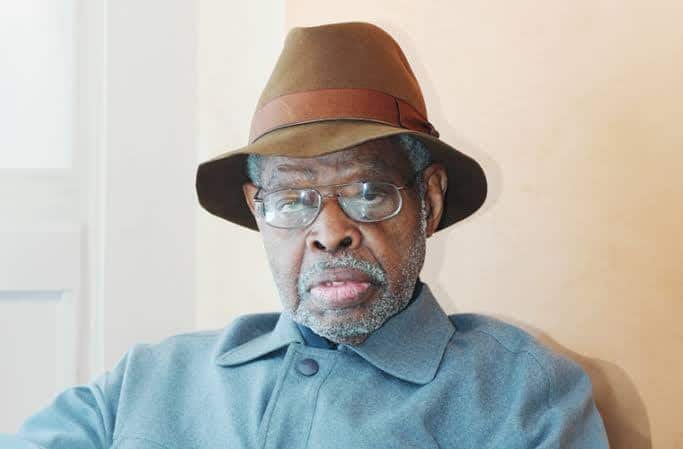

Dr. Yosef Ben-Jochannan broke the mold despite the criticisms.
Dr. Ben — that's what we called him, never anything stiffer than that — was not the kind of man you pictured when someone said "scholar." I saw him lecture on several occasions, in New York and in New Jersey. His lectures were funny at times, always factual, and brutally raw.
Sometimes he would make a point about something he’d said a hundred times before, and you could see the frustration flash across his face like it still bothered him to explain it. He'd crack a joke a breath later, sharp and a little irritated, and the room would laugh because it was true and because he clearly meant it.
The man I watched was down-to-earth, courageous, and unfiltered. A man who'd spent decades walking through the Nile Valley with his own two feet and had no patience left for pretending otherwise.
That is not the man most of academia chose to remember.
The Standard Nobody Else Had to Meet
Ask most people what they know about Dr. Yosef Ben-Jochannan, and if they know anything at all, it's this: his birth certificate was disputed. His degrees were disputed. Even his own name was disputed, in print, after he was no longer alive to answer for himself.
Dr. Yosef Ben-Jochannan authored forty-nine books and, for decades, led tours through Egypt, Ethiopia, and Sudan twice a year. He left a body of work on the Nile Valley and on Black Jewish history that reshaped how thousands of Black students understood their own past. And the conversation about his legacy still keeps circling back to a paper trail.
That's not scrutiny but a standard applied selectively — and once you notice who it gets applied to, you can't unsee it.
The Same Critic, The Same Pattern
Here's what should stop you: the scholar most associated with attacking Dr. Yosef Ben-Jochannan credibility, Mary Lefkowitz, is the same critic who went after Ivan Van Sertima's work on African contact with the Americas. Same tactic. Same target profile. Different Black scholar, same playbook.
White historians theorize about Africa constantly, on far thinner evidentiary ground, and their credentials are rarely the headline. But a Black scholar assembling four decades of research that puts ancient Egypt, the Nile Valley, and Black Jewish history directly into Black hands — outside of White academic gatekeeping — gets a different level of examination. There’s little to no scrutiny of the argument but an abundance of scrutiny of the man.
That's the giveaway. If Dr. Yosef Ben-Jochannan's work were actually weak, you'd expect the critics’ takedown to focus on the work. Instead, their focus on where he went to school.
What Yosef Ben-Jochannan Actually Built
Strip away the noise about his biography and look at what Dr. Yosef Ben-Jochannan left behind. We the Black Jews was one of the first major historical works about Black Jewish identity written by a Black scholar, for a Black audience, not filtered through anyone else's lens.
Africa: Mother of Major Western Religions traced the African roots underneath religious traditions most people were never taught to question. His Nile Valley tours weren't tourism — they were a direct, hands-on rebuttal to a version of Egyptian history that had quietly written Africans out of their own civilization.
He built that work over decades, in the same era and often the same rooms as John Henrik Clarke, Chancellor Williams, and Cheikh Anta Diop. That circle didn't just theorize about suppressed history. They lived the suppression in real time from the academy that was supposed to evaluate their scholarship on its merits.
Black Man of the Nile and His Family
If you only ever read one of his 49 books,
most people who knew his work will point you to Black Man of the Nile and His Family.
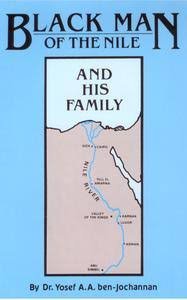
It's the book where Dr. Ben laid out, in exhaustive detail, the case that ancient Egypt — Kemet,
the land itself, its people, its gods, its dynasties — was a Black African civilization, not
the Mediterranean or Middle Eastern fiction that Western Egyptology had insisted
on for a century.
That claim sounds simple now, largely because Dr. Ben and the scholars
around him fought to make it common knowledge. In the era he wrote it,
it was treated as fringe at best and fraudulent at worst.
However, he backed it with the same kind of firsthand evidence
he built his lectures on: the temples, the tomb paintings, the statuary,
the genealogies, walked through page by page instead of asserted from
a distance. It wasn't a theory built in a library in Boston or London. It was built
standing in the Valley of the Kings.
That book did what the credential attacks were designed to prevent.
It gave ordinary readers, with no PhD and no gatekeeper standing between
them and the material, direct access to the evidence for Black Egypt. You
didn't need anyone's permission to read it, and you could draw your
own conclusion.
That's precisely why it needed to be discredited
by attacking the man instead of the argument — the
argument itself couldn't be kept behind the gate. Disqualified,
Not Discredited
That's the distinction that matters.
Discrediting someone means engaging with their claims and
showing where they fail. What happened to Dr. Ben was disqualification —
deciding in advance that his credentials weren't legitimate enough for his conclusions
to be taken seriously, regardless of the evidence he put on the table.
I think about that frustration I saw on his face sometimes, mid-lecture,
when he'd hit a point he'd made a hundred times and still had to defend.
I understand it differently now.
That wasn't a man annoyed at repeating himself.
That was a scholar who knew exactly what game was
being played with his name while he was still alive to watch it happen.
He would have laughed at the birth certificate stuff, honestly.
Probably did, more than once, in rooms I wasn't in.
Because he knew, better than his critics ever let on, that you can
spend years trying to disqualify a man from the conversation
— and it still won't undo the fact that thousands of people
walked out of his lectures seeing their own history
differently than when they walked in.
That part was never up for debate.
Want the history they left out of the syllabus? Black History Unfiltered covers the scholars, the suppression, and the truth underneath both. Enroll now!
0 Comments